How Metatarsal Problems Affect Walking and Balance
posted: Mar. 13, 2026.
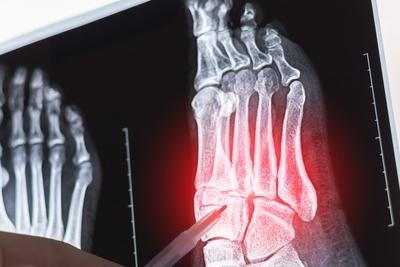
The metatarsals are the five long bones in the midfoot that connect the tarsal bones to the phalanges of the toes. They act as the primary weight-bearing structures during the propulsion phase of walking. When these bones are correctly aligned, they distribute your body weight evenly across the forefoot. However, metatarsal problems such as metatarsalgia, stress fractures, or Morton’s neuroma interfere with this distribution. At Chestnut Hill Podiatry Associates in Huntingdon Valley and Philadelphia, PA, Eugene Shagas, DPM, Albert Mosheyev, DPM, and Terence Dunn, DPM, evaluate these structural issues to restore your natural gait.
Impact on Natural Gait and Weight Distribution
Walking requires a smooth transition of weight from the heel to the ball of the foot. If a metatarsal bone is dropped or misaligned, it creates a localized pressure point. This often results in a sharp, aching, or burning sensation in the ball of the foot, known as metatarsalgia. To avoid this pain, the body instinctively alters its step, a compensation known as an antalgic gait. While this temporary change protects the foot, it places abnormal stress on the ankles, knees, and hips, leading to secondary orthopedic issues. Our team in Philadelphia and Huntingdon Valley performs detailed gait analysis to identify these subtle shifts in your movement.
Balance Interference and Fall Risk
Metatarsal problems significantly compromise your stability. The forefoot acts as a sensory platform that communicates with the brain to maintain balance on uneven surfaces. When inflammation or nerve compression occurs around the metatarsal heads, this sensory feedback is distorted. Conditions like sesamoiditis or bunions change the angle of the first metatarsal, weakening the big toe’s ability to grip the ground. This instability increases the risk of trips and falls, particularly in older adults. Eugene Shagas, DPM, Albert Mosheyev, DPM, and Terence Dunn, DPM, provide clinical interventions to stabilize the forefoot and improve your center of gravity.
Clinical Management for Forefoot Stability
Recovering your balance requires a thorough diagnostic approach. At Chestnut Hill Podiatry Associates, we use digital imaging to assess bone density and alignment. Management often involves the use of custom orthotics with metatarsal pads, which lift the bones and redistribute pressure away from the sensitive joints. For patients in Philadelphia and Huntingdon Valley, PA, who suffer from chronic nerve irritation, we offer specialized padding and injection therapies to reduce inflammation. By restoring the mechanical integrity of the metatarsals, we allow you to walk without the constant distraction of forefoot pain.
To learn more about your treatment options, or get help with any other foot and ankle issue, call our Germantown Ave office in Philadelphia at (215) 247-0879 or our Huntingdon Valley, PA, office at (215) 379-5112.